

A7 Corsair II Review 2026

3DLabPrint
About 3DLabPrint
A7 Corsair II 3D-Printable EDF Jet Review — Worth it?
The hobbyist challenge: you want a realistic, scale-feeling EDF jet without paying RTF kit prices or waiting for long lead times on fiberglass models. You also want a design that prints cleanly on a consumer 3D printer and actually flies like the real thing instead of ending up as a heavy, floppy display piece. The A7 Corsair II by 3DLabPrint aims to solve that — a fully 3D-printable 50 mm EDF Corsair model intended for hobby-level printers and pilots who like to build, tweak, and fly.
Why this is a practical solution
- The package includes 3MF files with Prusa Slicer settings, pre-sliced G-code (for direct drive printers) and STL files — so you can start printing with fewer guesswork steps.
- The airframe is optimized for a 50 mm XFly Galaxy EDF, uses LW-PLA for lightweight parts and standard PLA where strength is needed, and is designed so you don’t need carbon rods or exotic reinforcements.
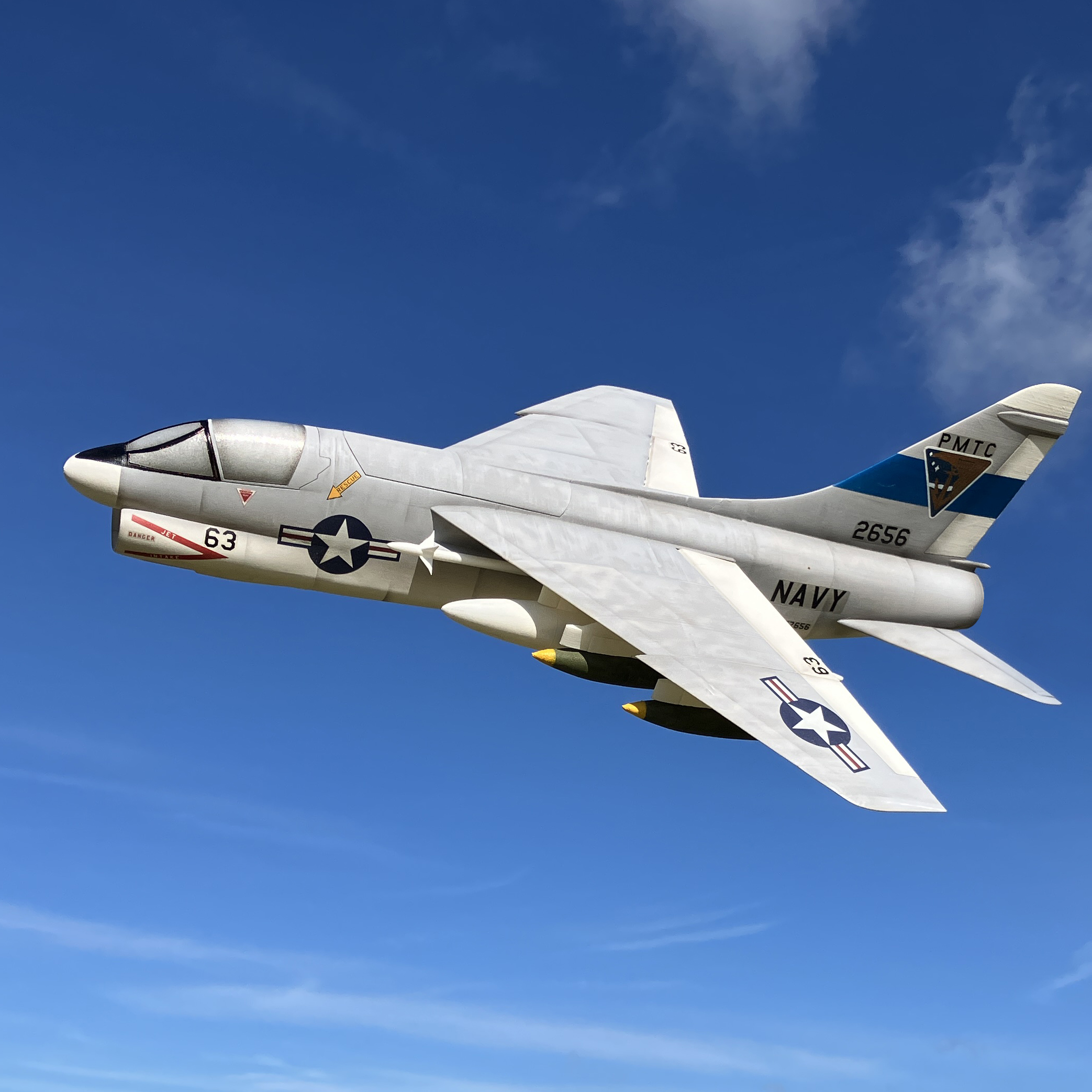
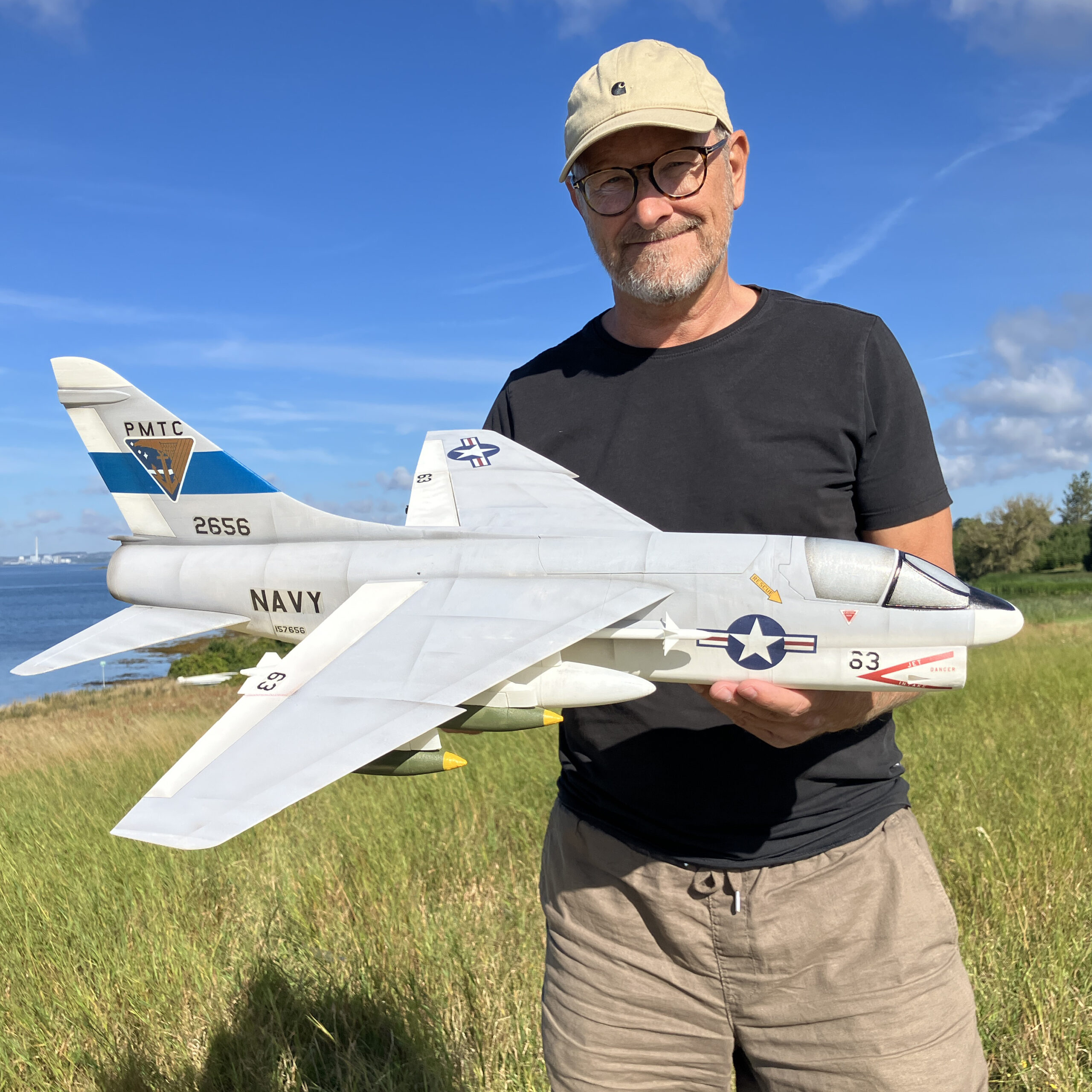
- Scale details (intake, high-mounted swept wings, weapons, decals) and functional features (CG cradle, control-throw gauges, catapult hook) make it a true flyable scale project, not just a desk model.
Specifications & Materials
| Model | A7 Corsair II |
| Designer / Brand | Michael Hammer / 3DLabPrint |
| Format Included | Prusa Slicer 3MF (with settings), presliced G-code, STL, decal files |
| Required Build Volume | 200 × 200 × 200 mm (per piece) |
| Filaments | LW-PLA (PolyLight) for most parts; standard PLA (PolyAir) for load-bearing components |
| Power | 50 mm XFly Galaxy EDF (recommended); compatible with other 50 mm EDFs (e.g., FMS) |
| Battery | 4S 1800 mAh recommended (flight times ~4–6 minutes) |
| Servos | 4 × 9 g servos |
| Included Accessories | Decal sheets, AIM-9/Mk-82/fuel tank models (magnetic or glue mount), CG cradle, control-throw gauges |
| Assembly | Glue (cyanoacrylate) assembly; no carbon tubes required |
| Price | $20.00 (USD) |
Real-world experience: Pros & Cons
What I liked (Pros)
- True scale look: The intake, wing planform and loadout shapes closely resemble the real A-7. Once printed and painted, it presents very well at field fly-ins.
- Flight performance: With the recommended XFly Galaxy 50 mm EDF and a 4S 1800 mAh pack the model has lively thrust, predictable acceleration and a clean glide. Flight times of 4–6 minutes are realistic for spirited flying.
- Thoughtful print workflow: Inclusion of 3MF presets and pre-sliced G-code is a time-saver, especially for pilots using direct-drive printers. It reduces the initial tuning work.
- No exotic reinforcements: Designed to be structurally sound using filament-only construction (LW-PLA + PLA) — easier for makers who don’t want to fabricate carbon spars.
- Useful accessories: CG cradle and control-throw gauges are small touches that make setup and trimming less trial-and-error.
Where it fell short (Cons)
- Print time and post-processing: Expect many hours of printing and a fair bit of cleanup — seam lines, support removal and a bit of sanding are needed to get a show-quality finish.
- Assembly precision required: While no carbon is required, alignment of EDF duct, servo linkages and intake halves matters. Misalignment affects performance noticeably.
- Durability on rough landings: The PLA structure is reasonably robust, but hard crashes will shatter thin sections. Reinforcement or a careful flying style is recommended for rough fields.
- Component dependencies: To achieve the advertised performance you really should use a good 50 mm EDF and a proper 4S battery — lower-quality motors or small batteries will underwhelm.
- Not beginner-friendly: This is a build-and-tune project, not a plug-and-play kit. New pilots may struggle with setup and trimming.
Build & Flight Notes
- Printing: I printed most parts in LW-PLA and a few belly/frame pieces in standard PLA. Slicing presets matched my printer well; minor tweaks to retraction and cooling were still required.
- Assembly: Cyano glue works well for mating pieces. Use the control-throw gauges included to set recommended throws — they make trim predictable.
- Launch options: The model hand-launches cleanly, but for reliable takeoffs a bungee/catapult with ~5–6 kg pull is best; a catapult hook is included for this reason.
- Flight trimming: Balance as per the CG cradle suggestions and start with modest throws. Once trimmed, the A7 is stable and fun for scale passes and moderate aerobatics.
Quick comparison
A7 Corsair II (3DLabPrint) vs. FMS 50mm EDF Scale Jet (RTF/PNP)
- Cost: A7 (3DLabPrint) is lower upfront ($20 for files) but requires parts (EDF, battery, servos) and time to print. FMS RTF/PNP costs more but is ready sooner.
- Customization: 3D printable model wins — you control materials, finish, payload (magnets vs glue), and repairs. FMS is fixed configuration.
- Build time: FMS is faster to get in the air; A7 requires printing and assembly hours to days depending on printer speed.
- Flight feel: Both can be excellent; A7 performs very well when built to spec but depends more on builder skill and component choice.
A7 Corsair II vs. Another 3D-printable Jet (e.g., 3DLabPrint A-4 Skyhawk)
- Scale vs role: The Corsair is a heavier, more distinctive-profile jet; the A-4 tends to be more compact. Choice depends on which plane’s look you prefer.
- Complexity: Both are similar in complexity; expect similar print times and assembly steps. Corsair’s intake and larger fuselage parts mean slightly larger pieces for detail.
- Flight dynamics: Each design has unique handling — Corsair leans toward stable attack-pass performance; check community builds for tuning tips specific to each model.
Who should buy this?
- Experienced modelers with access to a 200×200×200 mm 3D printer and basic finishing tools.
- EDF pilots who like scale looks and are happy to tune and trim — intermediate to advanced flyers.
- Hobbyists who prefer customization: paint, magnets for ordnance, and the ability to reprint damaged parts quickly.
- Not ideal for total beginners, casual flyers who want simple RTF options, or those without a 50 mm EDF motor and 4S battery.
Final verdict
For the maker-pilot who enjoys the build process and wants a convincing, flyable scale A-7 Corsair II, this package is an excellent value. The low file price ($20.00 USD) plus the included presets makes it approachable for experienced hobbyists. Performance with the recommended XFly Galaxy 50 mm EDF and 4S 1800 mAh battery is lively and satisfying, and the included setup aids (CG cradle, throw gauges, decals) show attention to detail.
However, be realistic about the time investment: printing, post-processing, and careful assembly are required to get the best results. If you want a quick, out-of-the-box flying experience and don’t care about printing, an RTF/PNP model will save time — but you’ll pay more and lose customization.
Recommendation
- If you enjoy building and tuning and want a scale EDF that performs well, buy it — worth it for makers and scale fans.
- If you want to fly immediately and avoid printing/assembly, consider an RTF alternative instead.
Tip: If you plan to buy the files and components through my store, check for discount codes and special offers at checkout to save on the EDF and battery bundles.
Images
Overall score: 4/5 for intermediate makers and scale-focused EDF pilots — strong design, excellent documentation, and very good in-flight behavior when built to spec.