
Promptmetheus Review — Worth it for Prompt Engineers?
If you build, test, or ship applications that rely on large language models (LLMs), you know how messy prompt development can get: scattered drafts, inconsistent evaluations, and difficulty reproducing results across models. Promptmetheus positions itself as a Prompt Engineering IDE designed to tame that chaos — with support for 100+ models, prompt versioning, automatic evaluations, and tooling for agents and workflows. I spent several weeks using it as my daily prompt editor and evaluator. This review breaks down whether it lives up to the promise and who will get the most value from it.
Shop Now
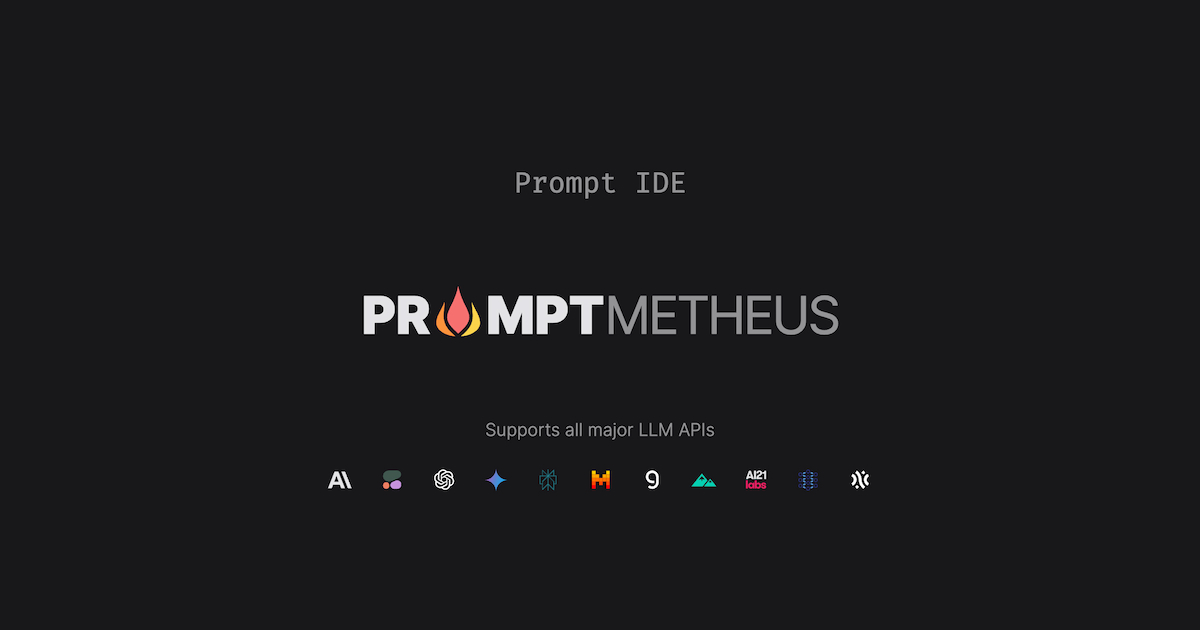
Why this matters (the problem it solves)
- Prompt experimentation often becomes unmanageable: multiple model endpoints, versions, and few reproducible records of what changed.
- Teams need repeatable evaluation and a shared place to iterate on prompts, metrics, and guardrails.
- Promptmetheus centralizes prompt composition, automated testing, and cross-model comparisons so you can iterate faster and ship with confidence.
Specifications / Materials (Material & Quality)
| Product | Promptmetheus: Prompt Engineering IDE |
| Platform | Web-based IDE |
| Model Support | 100+ models (multi-provider support) |
| Key Features | Prompt composition, versioning, automatic evaluations, prompt comparisons, workflows/agents, integrations, export |
| Collaboration | Project spaces, shared history, comments |
| Quality | Polished UI, stable core flows, rapid iteration features |
Real-world experience — Pros & Cons
What I liked
- Unified model testing: Running the same prompt across multiple providers took a few clicks. Having results side-by-side makes differences in behavior obvious.
- Prompt versioning: Built-in history and the ability to branch or compare prompt versions prevented accidental regressions. It’s one of the features that actually saves time in production workflows.
- Automatic evaluations: Defining evaluation metrics (accuracy, format checks, heuristics) and running them across runs is fast and repeatable. That’s crucial for convincing stakeholders results aren’t anecdotal.
- Workflow / agent support: Composing simple multi-step flows or agent-driven tasks inside the IDE made prototyping conversational flows and retrieval-augmented tasks straightforward.
- Collaboration: Project-based organization, comments, and shared run histories are great for teams—no more sending JSON blobs in Slack.
- Polish & responsiveness: The UI feels modern and responsive. Editing, diffing, and running experiments is fluid even when testing many runs.
What could be better
- Learning curve: While approachable, the depth of features (workflows, custom evaluations, model credentialing) takes time to master. Expect a few full sessions to get up to speed.
- Latency with remote models: When running large batches against certain providers, results were sometimes delayed. Not a blocker for development but noticeable for large-scale evaluation.
- Enterprise features behind tiers: Some integrations and advanced access controls are gated to higher plans, which could be limiting for larger teams evaluating the platform.
- Export/deployment: Exporting prompts and metrics is supported, but deploying prompt bundles into production still requires custom glue (APIs/CI) on your side.
Quick comparison
Promptmetheus vs OpenAI Playground
🎁 Unlock Coupons & Deals View all available discount codes- OpenAI Playground is great for quick single-model exploration and is free for basic testing. Promptmetheus adds structure: versioning, multi-model comparison, and automated evaluations — features the Playground lacks natively.
- If you only prototype on a single provider, Playground is lightweight. For multi-provider experiments or team workflows, Promptmetheus wins.
Promptmetheus vs LangSmith / PromptLayer
- LangSmith and PromptLayer focus heavily on observability and telemetry for prompts. Promptmetheus overlaps with those features but adds a full editor/IDE experience and built-in evaluation tooling.
- If your priority is deep telemetry and trace logging, LangSmith may edge out. If you want an all-in-one prompt authoring, testing, and evaluation workspace, Promptmetheus is more prescriptive.
Who is this best for?
- Prompt engineers and ML engineers who iterate on prompts across multiple model providers.
- Product managers and designers building conversational UX and want reproducible evaluations.
- Small to medium engineering teams that need collaboration, version control, and automated testing for prompts.
- Startups and teams shipping agent workflows or retrieval-augmented systems who want a single place to prototype and evaluate.
- Not ideal for casual hobbyists who only need occasional single-model testing and want a free, minimal tool.
In daily use Promptmetheus felt like a thoughtful, productivity-first IDE for prompt development. Its strongest assets are cross-model comparisons, versioning, and automated evaluations — all of which move prompt work from trial-and-error to repeatable engineering.
Bottom line & call to action
Promptmetheus is a strong pick if you treat prompts as code and want reproducible, team-ready workflows for LLM development. It isn’t a quick playground replacement for single-model tests, but for teams and professionals who need reliability and visibility during prompt iteration, it’s well worth exploring.
If you plan to purchase or subscribe, note that there are discount codes and special offers available when purchasing through my store — worth checking before you commit.