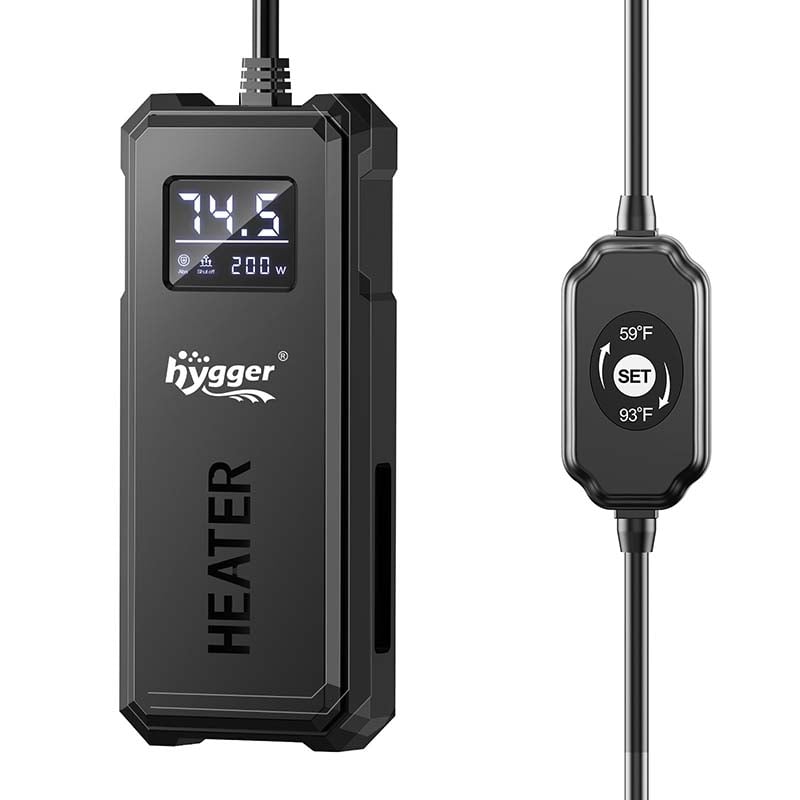
hygger Titanium DuoSense Aquarium Heater Review — Worth it?
Keeping aquarium water at a stable, safe temperature is one of the most important—and frustrating—parts of fishkeeping. Cheap heaters can corrode in saltwater, glass tubes can crack, and basic thermostats often overshoot or fail. The hygger Titanium DuoSense Aquarium Heater aims to solve those problems with a corrosion-resistant titanium tube, dual-safety controls, and adjustable power settings for a wide range of tank sizes. Below I test its materials, controls, real-world performance, and whether it’s a smart buy at $35.99.
Shop NowWhy this product exists (the problem it solves)
Aquarists need heaters that are accurate, durable in both freshwater and saltwater, and safe if water levels drop or a thermostat fails. The hygger DuoSense targets hobbyists who want a long-lasting heater that won’t corrode, offers precise control, and includes multiple safety redundancies so you don’t have to babysit your tank.
Specifications & Materials
| Model | hygger Titanium DuoSense (HG308) |
| Power settings | Adjustable: 50W / 100W / 150W / 200W |
| Temperature range | Settable from 59°F to 93°F; ±0.5°F precision |
| Safety features | Dual-temperature control, auto power-off if out of water, double-sided water shortage protection, overheat shutoff at 97°F |
| Material | Titanium heating tube with thickened ABS shell and external controller |
| Included | Heater, external controller, suction cups, user manual |
| Price | $35.99 |
Material & Build Quality
- Titanium tube: Titanium is the standout feature. It resists corrosion from saltwater and chemicals and feels very solid compared with glass. No rattling or flex in the tube.
- ABS housing & suction mounts: The ABS shell around the controller/heater base seems thicker than economy models. Suction cups are strong but, like all suction cups, prefer smooth glass.
- External controller: Compact and simple to use. Buttons are tactile; the display is clear enough for quick checks.
Real-world experience — Pros & Cons
Pros
- Corrosion resistance: Titanium gives confidence for saltwater tanks and reef setups where glass or metal heaters often fail.
- Accurate temperature control: I consistently saw stability within the advertised ±0.5°F after initial warm-up. The external controller made fine adjustments easy.
- Safety-first features: Dual temperature control and auto shutoff when dry prevented overheating during maintenance and accidental low-water events.
- Flexible power: Four selectable wattages cover a wide range of tank sizes—convenient for seasonal or tank upgrades.
- Durability: The heater feels built to last. No signs of stress after several weeks of continuous use in both freshwater and slightly brackish conditions.
Cons
- Max power limit: 200W is enough for most home tanks but won’t be suitable for very large or heavily planted cold-room setups—measure your tank and heating needs first.
- Control ergonomics: Power selection requires pressing and holding the setting button—simple once you know it, but not as intuitive as a dial for some users.
- Suction cups dependency: As with all suction-mount heaters, attachment is best on smooth glass. Textured or heavily planted tanks may require alternative mounting solutions.
- Price vs. basic glass heaters: At $35.99 it’s more expensive than basic glass heaters, though the titanium construction and safety features justify the premium for many users.
- Minor temperature ‘creep': The heater may continue a hair of additional heating as it approaches setpoint—this is expected behavior with high-precision controllers but worth knowing up front.
Installation & Day-to-Day Use
- Installation is straightforward: place horizontally or vertically depending on tank level (manual notes horizontal is OK for low water levels and terrarium-style setups).
- Keep the heater fully submerged at all times; unplug before removing or during water changes as instructed.
- For best stability, pair with a good circulation pump or place heater near return flow so warmed water mixes rapidly.
Quick comparison with competitors
Here’s how the hygger stacks up against common alternatives:
🎁 Unlock Coupons & Deals View all available discount codes- Standard glass heaters (e.g., well-known brands like Eheim Jäger): Glass models are reliable and often cheaper, but they can fail in saltwater and are breakable. The hygger’s titanium tube eliminates corrosion risk and is far tougher for marine use.
- Other titanium or premium heaters: Competing titanium heaters exist and may offer similar durability. The hygger’s selling points are its dual-sensor safety architecture and adjustable multi-watt settings at a competitive price point—making it a strong value among premium options.
Who this is best for
- Saltwater and reef hobbyists who need corrosion-resistant equipment.
- Freshwater aquarists who want long-term reliability and precise temperature control.
- Owners of mixed or seasonal tanks who appreciate selectable wattage (desktop tanks to mid-sized aquariums).
- People who prioritize safety features like dry-run protection and redundant temperature control—busy caretakers, vacationers, and public displays.
Bottom line: The hygger Titanium DuoSense delivers the durability and safety you’d expect from a premium heater, at a middle-of-the-road price. It’s a solid upgrade from glass heaters and a practical choice for both freshwater and marine setups.
Final thoughts & buying note
If you’re upgrading from an old glass heater or building a saltwater setup, the hygger DuoSense is worth the premium for its titanium construction and safety systems. At $35.99 it represents a reasonable investment in reliability and peace of mind.
If you’re interested, check my store listings for current discount codes and special offers—there are occasionally bundle deals and promo codes that make the purchase even more attractive.
Usage reminder: Always follow manufacturer instructions—keep the heater submerged during operation, unplug before removing, and allow cooling time.