

Acorns Deal
Acorns Deal
Acorns
About Acorns
Acorns is a financial wellness app that helps individuals and families save, invest, and grow money automatically through simple, everyday habits.
Recurring Investments 20 | Acorns — Simple, Set-and-Forget Investing
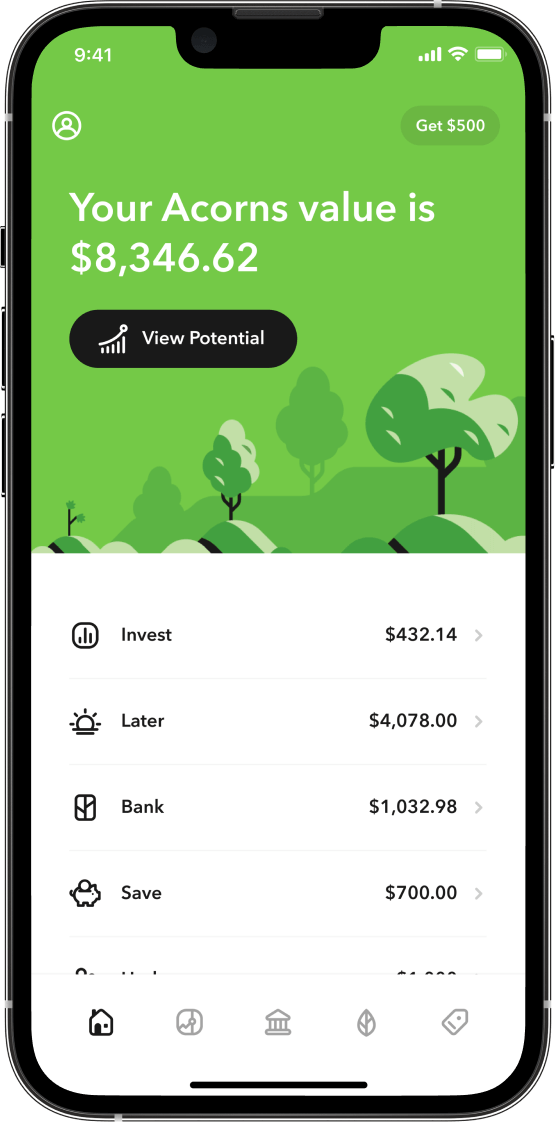
Looking to build wealth without thinking about it every day? Acorns’ Recurring Investments 20 lets you schedule regular $20 deposits that automatically invest into a diversified portfolio. For busy people, beginners, or anyone who wants consistent dollar-cost averaging, this product turns a small habit into long-term growth.
What is Recurring Investments 20 and how does it work?
Recurring Investments 20 is a feature within the Acorns app that allows users to set up automated investments of $20 on a recurring schedule — daily, weekly, or monthly. Once you connect a bank account and choose a frequency, Acorns transfers the funds and invests them according to your chosen portfolio.
This is not a savings account or a bank deposit: your money is invested in ETFs across asset classes (stocks and bonds) using Acorns’ robo-advisor model. The aim is steady, passive investing through automated contributions and diversification.
How recurring investing works (quick steps)
- Open or sign in to the Acorns app.
- Link a funding account (checking or savings).
- Select “Recurring Investments” and set the amount to $20.
- Pick a schedule: daily, weekly, or monthly.
- Choose or confirm your recommended portfolio.
- Funds transfer and are invested automatically on the dates you selected.
Key features of Recurring Investments 20
Below are the main features and why they matter for real-world investors.
1. Automated contributions — discipline without effort
Scheduling $20 regularly removes the decision friction that stops people from investing. Automation enforces consistency, which is critical for long-term growth. You won’t time the market — you’ll average into it.
- Benefit: Builds a saving and investing habit.
- Real-world example: Someone who sets $20 weekly deposits invests $1,040 in a year without thinking about it.
2. Dollar-cost averaging — smoothing volatility
Recurring investments naturally apply dollar-cost averaging. When markets fall, your fixed $20 buys more shares; when markets rise, you buy fewer. Over time this reduces the impact of volatility compared to lump-sum timing.
3. Low minimums — investing starts small
Acorns is designed for micro-investing. The $20 recurring size is accessible for many budgets and removes the barrier of high minimum investment requirements some platforms have.
4. Portfolio diversification — professionally allocated ETFs
Acorns allocates your recurring contributions across ETFs selected to match your risk profile. That means you get exposure to U.S. stocks, international stocks, and bonds without selecting individual securities.
- Benefit: Instant diversification reduces single-stock risk.
- Practical result: A young investor can take on more equity exposure; a retiree or conservative saver can favor bonds and cash equivalents.
5. Flexible schedules and easy adjustments
You can change the frequency, pause contributions, or update the amount at any time. Flexibility makes it practical for fluctuating budgets, seasonal income, or goal-based saving.
6. Integrations and extras (round-ups & found money)
While Recurring Investments 20 focuses on scheduled deposits, Acorns also offers Round-Ups (investing spare change from everyday purchases) and Found Money (partner offers that add to your balance). Combined, these features accelerate growth without adding much effort.
Real-world outcomes: What $20 can do
To illustrate, consider a conservative hypothetical example (not a promise of returns):
| Scenario | Contribution | 10-year total |
| $20 weekly, 52 weeks/yr | $1,040/yr | ≈ $14,200–$17,500 at modest returns |
| $20 monthly, 12 months/yr | $240/yr | ≈ $3,500–$4,500 at modest returns |
These are illustrative values showing how small, consistent deposits compound over time. Actual returns depend on portfolio allocation, market performance, and fees.
“I started with $20 weekly and didn’t notice the money missing. Five years later, the balance surprised me — it proved consistency beats timing.” — typical user experience
Fees, risks, and limitations
Before starting Recurring Investments 20, consider these points:
- Fees: Acorns charges a monthly fee for account tiers (varying by plan). For small balances, flat monthly fees can weigh on returns. Compare the cost per dollar invested.
- Market risk: Investments can lose value. Recurring investments reduce timing risk but don’t eliminate market risk.
- Liquidity: Investments are generally liquid ETFs, but market conditions can affect sale prices and timing.
- Tax considerations: Capital gains, dividends, and downside losses may have tax implications.
Who should use Recurring Investments 20 (and who shouldn’t)
Recurring Investments 20 fits many people, but it’s not universal.
Good fit
- Beginners who want an easy entry to investing with low effort.
- Busy professionals who prefer “set-and-forget” automation.
- People building emergency savings and retirement accounts incrementally.
- Individuals who benefit from behavioral nudges to save consistently.
Not the best fit
- Cost-conscious savers with very small balances who may be better off on fee-free platforms or brokerage accounts with percentage-based fees.
- Experienced investors seeking granular control over individual securities.
- Those needing guaranteed principal or FDIC-insured returns (Acorns invests in market instruments).
Final verdict — is Recurring Investments 20 worth it?
Yes, if you want a low-friction way to build an investing habit, embrace automatic dollar-cost averaging, and are comfortable with ETF-based portfolios and the platform’s fees. The $20 recurring amount is large enough to make a meaningful monthly contribution yet small enough to be sustainable for many budgets.
No, if you’re extremely fee-sensitive, need full control over asset selection, or require guaranteed account protection. In those cases, compare alternatives like low-cost brokerages, high-yield savings, or employer retirement plans.
Overall, Recurring Investments 20 by Acorns is a pragmatic tool for turning a modest, regular contribution into long-term investment growth. For disciplined savers who favor convenience and automated investing, it’s a practical first step toward building wealth.