
Recurring Investments 20 | Acorns — Review: Worth it for Small-Dollar Investors?
Introduction — the problem this solves
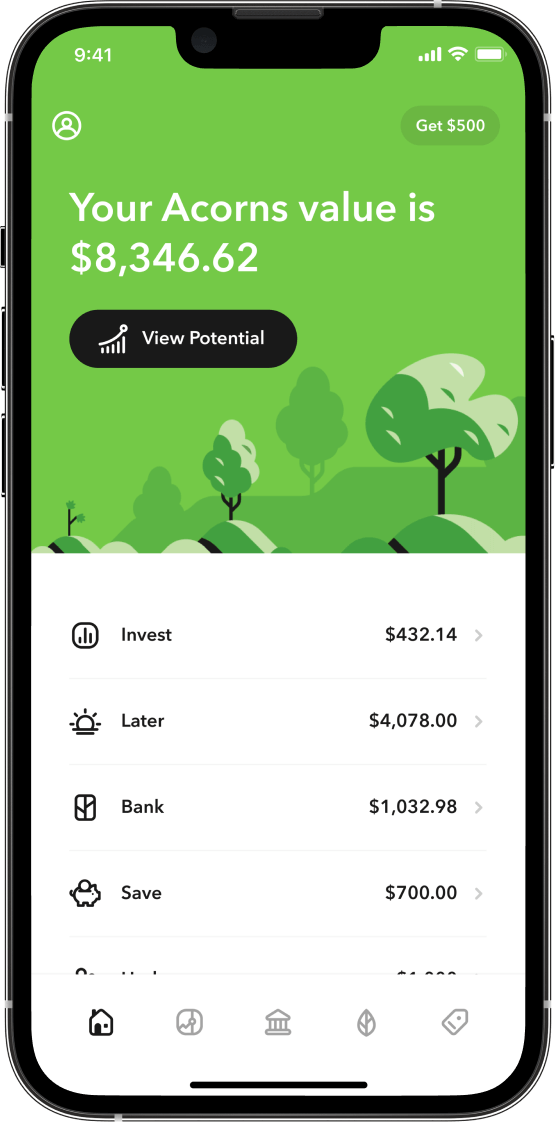
Many people want to start investing but struggle with consistency: busy schedules, mental friction, and fear of picking the “right time” all get in the way. Automating contributions removes the decision fatigue and builds wealth through habit. Recurring Investments 20 from Acorns is built precisely for that — it automates investing by putting $20 on a set schedule into a diversified portfolio, making regular investing simple for beginners and busy savers.
Specifications / Materials (Platform & Quality)
| Product | Recurring Investments 20 (Acorns) |
| Core idea | Automated $20 recurring contributions into an Acorns portfolio |
| Investment vehicle | ETF-based portfolios (Acorns Core portfolios) |
| Scheduling | Custom schedule (daily, weekly, biweekly, monthly) with a $20 preset focus |
| Fees | Acorns plans start at $3/month (USD); additional account tiers available |
| Security | Bank-level encryption; investments held via custodial brokerage, SIPC protection |
| Minimum | This product emphasizes a $20 recurring contribution; Acorns also supports flexible amounts |
Real-world experience — Pros & Cons
Pros
- Set-it-and-forget-it discipline: Scheduling $20 on autopilot is a low-friction way to build a habit. I found it easier to stay consistent than with manual transfers.
- Simple portfolio selection: Acorns assigns a diversified portfolio based on your risk profile, so you don’t need to pick individual securities.
- Automatic rebalancing: Portfolios are rebalanced automatically, which helps maintain your target allocation over time without manual intervention.
- Good for micro-investing: Small recurring amounts add up; the psychological barrier is low when the amount is just $20.
- Mobile-first convenience: The app makes it easy to adjust schedules, pause contributions, or change portfolios within a few taps.
Cons
- Subscription fee impact: A flat fee (starting at $3/month) is more significant for smaller balances. With only $20 contributions, fees can be a meaningful percentage of gains early on.
- Limited customization vs. robo-advisors: While portfolios are diversified, more advanced investors may miss deeper customization (tax-loss harvesting, tax-optimized strategies) offered by other services.
- Not bank-insured: Investments are not FDIC-insured; they’re investment accounts protected by SIPC up to standard limits. That’s normal for brokerage accounts but worth noting.
- Timing of transfers: Depending on your bank, transfers and settlement can take a couple of business days; the scheduled date isn’t always the trade execution date.
Quick comparison
Acorns — Recurring Investments 20
- Best for beginners and small-dollar investors who want automation and a simple portfolio.
- Flat subscription fee (from $3/month).
- Automatic round-ups and recurring deposits.
Stash (competitor)
- More choice of individual stocks and ETFs; educational content built in.
- Subscription tiers similar in price, but Stash sometimes offers fractional share buys and more control over allocation.
- Better if you want to mix guided portfolios with individual security purchases.
Betterment / Wealthfront (competitors)
- Robo-advisors focused on low percentage-based fees (often more efficient as balances grow).
- Offer advanced features like tax-loss harvesting, goal-based planning, and deeper tax optimization.
- Better if you plan to scale investments beyond micro-savings and want more portfolio sophistication.
Who should buy Recurring Investments 20?
- Beginners who want to start investing without picking stocks or timing the market.
- Busy professionals who need an automated system to stay consistent.
- People who want to dollar-cost-average with a predictable small contribution ($20) each period.
- Parents setting up a habit for teen or custodial accounts where small recurring deposits teach long-term saving.
Bottom line
Recurring Investments 20 from Acorns is worth considering if your priority is forming a consistent investing habit with minimal friction. The product nails simplicity: you schedule a $20 contribution and let the platform handle allocation and rebalancing. The main trade-off is the flat monthly subscription, which is more meaningful at smaller account sizes—so this is best as a starter strategy, not necessarily the only vehicle for long-term, large-balance investing.
If you’re taking your first steps into investing, automating $20 each pay period can beat doing nothing. Just be mindful of fees as your balance grows and consider moving to a lower-fee robo-advisor or brokerage when it makes sense.
If you decide to try Recurring Investments 20, note that there are discount codes and special offers available when purchasing through my store — check available promotions at checkout to reduce the initial cost.