
IPRoyal Review — Worth it?
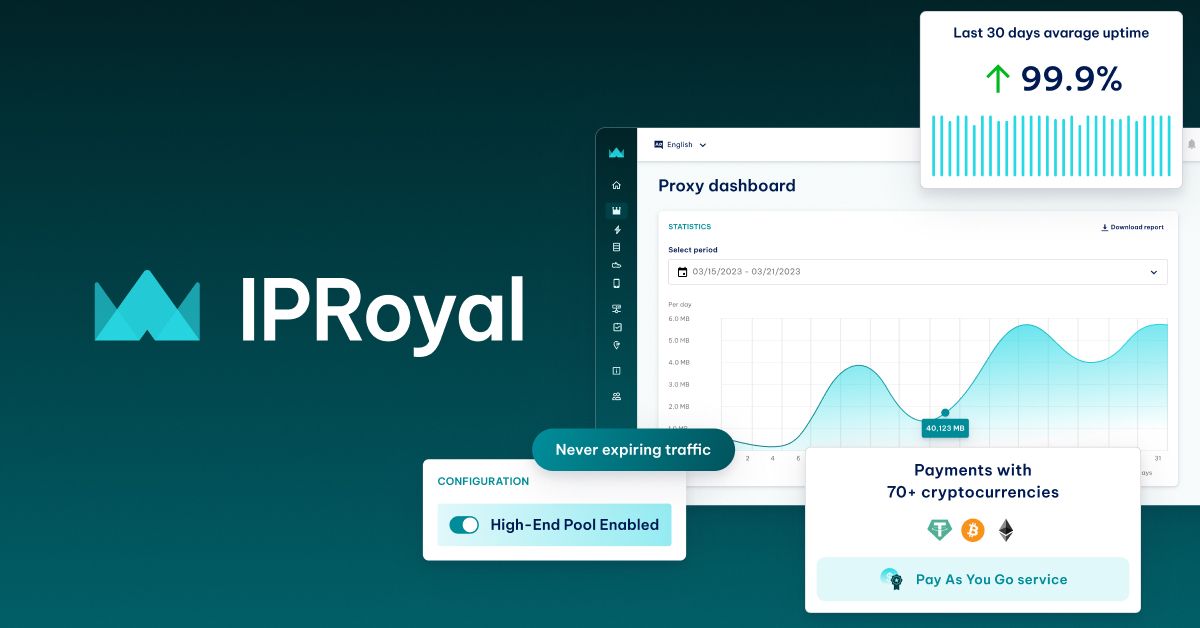
If you rely on proxies for web scraping, geo-testing, ad verification, market research, or privacy, you’re juggling reliability, speed, and cost. Many providers force long contracts, expire unused bandwidth, or hide setup complexity behind enterprise onboarding. IPRoyal positions itself as a simpler alternative: no-contract plans, non-expiring traffic, and a self-serve dashboard. This review tests whether that promise translates into a practical, everyday tool for developers, marketers, and power users.
Why this solves a real problem
- Web operations often need short bursts of IP access without long-term commitments—pay-as-you-go, non-expiring credits reduce waste.
- Easy setup and a clear dashboard matter when you need to spin up sessions quickly for testing or scraping.
- Balancing quality and price is crucial: fast, stable IPs cost more, but overly expensive enterprise options are overkill for many users.
Specifications / Materials (Material & Quality)
IPRoyal is a proxy service built around flexibility and cost-efficiency. In my evaluation I focused on the tangible parts of the offering: the product types, dashboard and tooling, authentication options, and the claims about traffic handling.
- Product types: Residential and datacenter proxies are available; the platform emphasizes wide geographic coverage and rotating IPs for scale.
- Billing model: Pay-as-you-go with non-expiring traffic—credits remain usable until consumed. No long-term contract required.
- Self-service dashboard: Clean UI for creating proxy endpoints, viewing usage, and managing credentials. Basic API capabilities for automation are provided.
- Authentication & sessions: Username:password (and IP whitelisting in many setups) plus session control for sticky/residential sessions.
- Support & documentation: Knowledge base and ticket support are available; response times and depth vary depending on plan and query complexity.
- Security & compliance: Standard industry practices—TLS for HTTPS traffic and basic logging controls. For enterprise compliance needs, confirm specific requirements with the provider.
Real-world experience — Pros & Cons
Pros
- Ease of onboarding: Account creation and proxy setup were straightforward. The dashboard walks you through endpoint creation and credential management with minimal friction.
- Flexible billing: Non-expiring credits remove pressure to use bandwidth by a fixed date—ideal for intermittent needs and experimentation.
- Good value for smaller to medium workloads: Competitive pricing and no-contract access make it economical for teams that don’t want an expensive ongoing commitment.
- Reliable performance for typical tasks: In routine scraping and geo-testing workloads, latency and throughput were acceptable and stable; rotating residential IPs handled common block patterns reasonably well.
- Self-service automation: API and scripted workflows make it easy to integrate into CI/testing or scraping pipelines.
Cons
- Not enterprise-grade for massive scale: If you run very large-scale scraping operations or need strict SLA-backed performance, competitors aimed at enterprise customers may be preferable.
- Occasional block/verification hiccups: As with any residential proxy provider, some target sites detect and challenge traffic—solvable but requires rotating strategies and session tuning.
- Support depth varies: Documentation covers common scenarios; complex implementation questions may require ticketing and can take longer to resolve than with white-glove enterprise support.
- Feature parity can vary by plan: Advanced features (dedicated IPs, higher concurrency) may be gated to higher tiers.
Quick comparison
| Provider | Strengths | Considerations |
|---|---|---|
| IPRoyal | No-contract, non-expiring traffic, easy self-service, good mid-range value. | Less tailored for ultra-high-scale enterprise needs; support varies by plan. |
| Smartproxy | Strong balance of usability and enterprise features; broad residential pool. | Generally pricier for large-volume use; long-term commitments for best rates. |
| Bright Data (Luminati) | Enterprise-grade, huge IP coverage, advanced controls and SLAs. | Expensive and more complex to set up; overkill for small teams. |
Who is IPRoyal best suited for?
- Developers and small teams that need intermittent proxy access without locking into contracts.
- Marketers and growth teams doing moderate-scale web scraping, price monitoring, or geo-testing.
- Freelancers and agencies who value cost predictability and non-expiring credits.
- Anyone who wants a straightforward self-serve experience and the flexibility to scale up as needed.
Final verdict
IPRoyal is a solid mid-market choice: it delivers the essential features most users need—residential and datacenter options, an intuitive dashboard, and flexible billing—without the overhead of enterprise contracts. For moderate-scale scraping, geo-unblocking, and testing workflows it offers good reliability and value. If you require SLA-backed enterprise features or the largest possible IP pools, larger providers remain better fits. But for cost-conscious teams and independent users, IPRoyal is worth considering.
Tip: If you're planning to try IPRoyal, check my store—there are discount codes and special offers available for purchases made through it.
Overall: Recommended for small-to-medium teams and individuals who want flexible, pay-as-you-go proxy access with straightforward management. For enterprise-scale needs, compare SLAs and advanced support options before committing.